
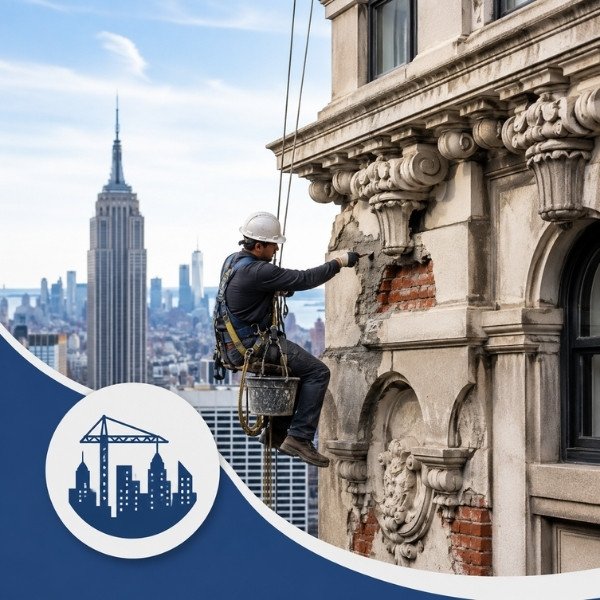
The architecture of a building’s front protects interiors from environmental dangers in addition to improving aesthetics. Facade upkeep is crucial for performance and durability. This blog will teach you how to keep your building sturdy and aesthetically pleasing for decades, as well as the importance of materials, innovations like kinetic facades, and practical facade care techniques.
Weather, pollutants, and structural stresses are continual threats to any facade. Facades can degrade without regular maintenance, endangering structural integrity and driving up expenses. Frequent maintenance guarantees safety and excellent performance in addition to extending the lifespan of the facade. For instance, mildew and rust can develop on badly maintained facades in humid areas, diminishing their aesthetic and practical value. Did you know that facade failures cause 30% of building problems reported globally? These dangers can be considerably reduced by making maintenance investments. If you are planning restoration work, it is equally important to choose the right facade repair contractor to ensure long-lasting and professional results.
The majority of the damage builds up gradually over months or even years rather than from a single, dramatic occurrence, which is one of the reasons facade restoration is all too easy to overlook.
The following are some of the elements that will cause harm to your facade:
Choosing the right cleaning supplies and techniques is part of preventive maintenance for your facade. Since every facility is different, maintenance should be tailored according to a variety of parameters, including the size and materials of the structure, the location, and the kinds of damage that need to be fixed.
Significant deterioration lowers your property’s value and may pose a risk to public safety. Additionally, the longer you wait, the more difficult and costly it is to correct.
Making facade restoration a regular aspect of conducting business rather than something you put off until later starts with routine inspections by a reliable service provider.
Note: Restoring a facade is a difficult procedure that calls for specialized knowledge. Our experts evaluate the building’s state, pinpoint underlying problems, and create a restoration strategy.