Category: Blog

  • Top 5 Facade Repair Company in NYC: Reliable Experts for Building Restoration

    Top 5 Facade Repair Company in NYC: Reliable Experts for Building Restoration

    Maintaining the exterior of a building preserves the structure, appearance, and investment value of the property. In New York City, changing weather conditions, aging masonry, water infiltration, and facade deterioration can create serious maintenance concerns. Building owners need exterior restoration and masonry repair contractors with an understanding of the building requirements of New York City.

    Choosing an experienced facade repair company in NYC is essential for handling these issues. Here are five companies offering facade repair and restoration services in the New York City area.

    Top 5 Facade Repair Companies in NYC

    1. SMA Restoration Inc.

    SMA Restoration Inc. is a New York-based contractor that offers various exterior restoration services to residential and commercial clients, including facade restoration, masonry repair and waterproofing. It also provides maintenance services for exterior buildings. The company has also worked on projects related to Local Law 11 to assist property owners with water penetration and other problems related to exterior wall conditions of their buildings.

    2. Facade Repair NYC

    Facade Repair NYC offers facade restoration and exterior repair services for buildings in New York City. It repairs masonry and facade issues, such as replacement of brickwork, repointing, and repair of parapet walls and waterproofing.

    The company provides similar services that help property owners with Local Law 11, and facade maintenance. Building owners with issues of damaged masonry and deteriorating mortar joints should consider Facade Repair NYC.

    3. MGR Restoration Inc.

    MGR Restoration Inc. provides various building restoration services including facade restoration and masonry repair. The company also provides waterproofing services and is experienced with projects relating to New York City’s Local Law 11. MGR Restoration works with building owners and managers to repair exterior deterioration and maintain the building in a proper condition.

    4. Nova Construction Services

    Nova Construction Services is a general contractor and builder in New York that specializes in construction and building restoration, including facade restoration. Property owners are encouraged to review the project scope, estimate materials, time frame, and examine Nova Construction’s related experience before making a hiring decision.

    5. AARCO Contracting

    AARCO Contracting provides construction and restoration-related services in the New York area, including masonry, waterproofing, and facade improvements. Property owners can discuss their repair requirements with the company to determine whether its services suit their projects.

    How to Choose a Facade Repair Company in NYC

    Choosing a contractor involves more than comparing estimates. Consider the company’s experience, range of services, and knowledge of NYC building requirements before making a decision. Before finalising a contractor, consider these factors:

    • Relevant Experience: Check whether the company has completed projects involving similar facade damage, including facade restoration in the Bronx.
    • Service Range: Confirm that it handles the required work, such as brick repair, repointing, waterproofing, or parapet restoration.
    • Local Requirements: Discuss its experience with NYC facade inspection and Local Law 11-related repairs. Property owners in Queens can also review FISP contractor services in Queens.
    • Project Estimates: Request a clear breakdown of materials, labour, expected timelines, and repair methods.

    Analyzing these factors will help the property owner find the most appropriate contractor to complete the scope of work needed for their building. Owners can also explore facade repair services in Queens, Brooklyn, the Bronx, Staten Island, and Long Island when comparing local service coverage.

    Conclusion

    Choosing the right facade repair contractor is important for repairing and restoring the exterior of a building. The five companies listed above offer repair and restoration services in NYC properties and have experience with different types of work.

    Among these options, Facade Repair NYC performs masonry restoration and repairs, waterproofing, parapet repairs, and work related to NYC Local Law 11. Property owners should consider Facade Repair NYC for their restoration needs and learn more about the company or contact their team for more information.

    Frequently Asked Questions

    1. What services does a facade repair company in NYC provide?

    Services offered by a facade repair company may include brick replacement, repointing, masonry restoration, parapet wall repair, lintel repair, waterproofing and exterior wall maintenance. Property owners can explore additional information in the company’s facade restoration blog.

    2. When should I hire a facade repair contractor?

    Contact a facade repair contractor for an inspection if you notice cracked or fallen bricks, spalling masonry, deteriorated mortar joints, leakage, or any other problems with the exterior walls of your building.

    3. Why is Local Law 11 important for NYC buildings?

    Local Law 11 requires qualifying buildings to undergo periodic facade inspections and address unsafe conditions. Property owners may need professional contractors to complete the recommended repairs.

    4. How can I choose the right facade repair company in NYC?

    You should consider their experience, projects they have completed, areas they serve, understanding of local building laws. You should get a written estimate before the work begins.
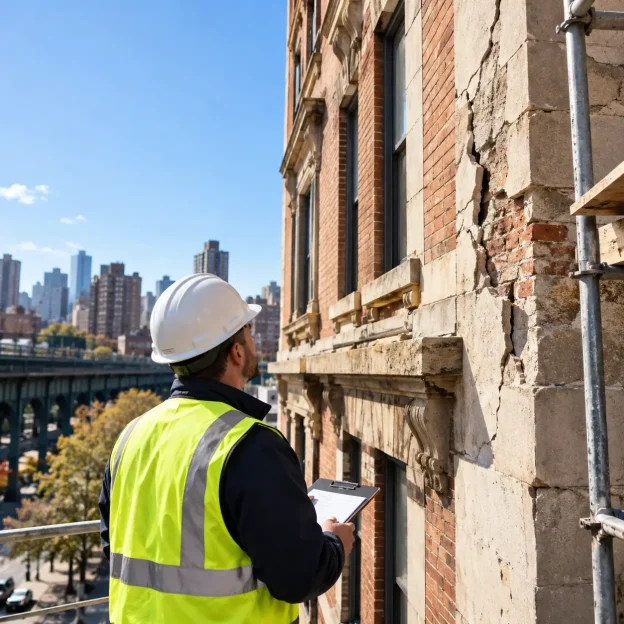
  • Facade Inspection Queens: How Moisture Damage Shows Up During an Inspection

    Facade Inspection Queens: How Moisture Damage Shows Up During an Inspection

    Moisture can gradually weaken a building facade without creating obvious problems at first. Water may enter through cracks, damaged mortar, failed sealants, windows, parapets, and other exposed areas. Over time, continued moisture can affect masonry and create repair concerns.

    Facade Inspection Queens can help identify problem areas before they become serious issues. Oftentimes, the issues may not be immediately noticeable. Inspectors may look for signs of failed masonry units, coatings and sealants. Property owners should be aware of issues that Facade Inspectors look for so that they may address issues in a timely manner.

    How Moisture Affects a Building Facade

    Water can enter through small openings and move behind exterior surfaces. Repeated exposure may contribute to deterioration of brick, concrete, mortar, and sealants.

    During an inspection, professionals commonly examine:

    • Cracked masonry and mortar joints
    • Window frames and sealants
    • Parapet walls and coping
    • Facade openings
    • Previous repair areas
    • Roof-to-wall connections

    These areas can provide clues about possible water entry and deterioration.

    What Inspectors Look for During a Facade Inspection Queens

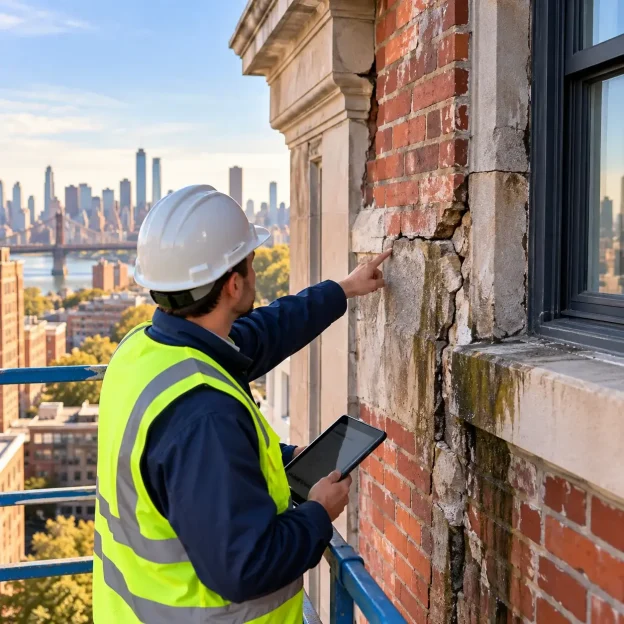
    Cracked Masonry and Mortar: Cracks in masonry and deteriorated mortar joints can provide pathways for water to enter the facade. During a Facade Inspection Queens, inspectors determine the location and condition of these defects to help determine if further evaluation or repair is warranted.

    Spalling and Loose Materials: Moisture can contribute to deterioration that causes brick, concrete, or other facade materials to chip, flake, or break away. Spalling and loose materials should be professionally evaluated because they may indicate deterioration beneath the surface.

    Staining and Discoloration: Dark marks and discoloration of materials may indicate that the facade has been exposed to water over an extended period of time. These signs of deterioration may be noted around windows and in masonry joints and other locations that may trap water. While the presence of staining may not always indicate the exact cause, it may help to identify areas warranting further examination.

    Damaged Sealants: Sealants around windows and facade joints can deteriorate due to age and weather exposure. Gaps or failed sealants may create pathways for water to enter areas that are difficult to see during a basic visual check.

    Why Early Moisture Detection Matters

    Leaving moisture problems unaddressed can allow deterioration to spread to nearby materials. Continued water entry may affect masonry, mortar, metal components, and previous repairs.

    Property owners should pay attention to recurring leaks, cracks, staining, spalling, and changes around windows or exterior walls. Professional evaluation can help determine the extent of the problem and the appropriate repair approach.

    For buildings subject to NYC facade regulations, repair requirements may also need to be considered. A qualified Local law 11 Contractor NYC can handle necessary facade repair work based on findings and project requirements.

    Professional Facade Repair Support

    Inspection is only one part of facade maintenance. When moisture damage is found, repairs should address both the affected materials and, where possible, the source of water intrusion.

    Facade Repair NYC helps property owners address masonry deterioration, moisture damage, and other facade concerns. Similar issues may also be identified during a Facade Inspection Brooklyn, particularly around windows, parapets, and masonry joints.

    Conclusion

    Moisture damage can begin with a small crack, failed sealant, or deteriorated mortar joint and gradually affect a larger section of a facade. A professional Facade Inspection Queens can identify signs such as staining, cracking, spalling, and loose materials. If you notice these issues, contact Facade Repair NYC for professional inspection and facade repair assistance.

    FAQs

    1. What causes moisture damage to a facade?

    Cracks, deteriorated mortar, failed sealants, windows, parapets, and other openings can allow water to enter exterior walls.

    2. Can moisture damage occur without an interior leak?

    Yes. Water can remain within exterior materials without immediately producing visible damage inside the building.

    3. What signs can indicate moisture damage?

    Common signs include staining, cracks, deteriorated mortar, spalling, loose materials, and damaged sealants.

    4. Can a Local Law 11 contractor perform facade repairs?

    A qualified contractor can perform required facade repair work while coordinating with the appropriate inspection and design professionals.

  • 7 Warning Signs Your Bronx Building Needs Facade Restoration

    7 Warning Signs Your Bronx Building Needs Facade Restoration

    Your building’s facade helps protect the structure from rain, moisture, temperature changes, and environmental exposure. When building materials deteriorate, the problem can affect safety and appearance and can also affect the spaces inside the building.

    Recognising the warning signs early can help you determine when professional Facade Restoration Bronx services are required. If the owners decide to wait, a small crack can lead to an extensive problem because of extensive water intrusion or even deteriorating masonry. A professional inspection helps the owners understand the cause of the damage and the correct way to restore it.

    What Does Facade Restoration Include?

    Façade restoration involves repairing damaged exterior components while preserving suitable parts of the original structure. Depending on the building’s condition, it may include repointing, brick replacement, stone repair, crack sealing, lintel restoration, waterproofing and parapet work. Minor defects may need targeted repairs, while widespread damage may require a complete restoration plan.

    Signs Your Building May Need Facade Restoration

    The following warning signs can indicate that your building requires a professional inspection and possible restoration.

    • 1. Cracked or Deteriorated Masonry: Cracks in bricks, stone, concrete or mortar joints can allow moisture to penetrate the façade. Even small openings may expand through seasonal movement and continued weather exposure.
    • 2. Loose or Falling Materials: Loose bricks, stone fragments or concrete above sidewalks and entrances can create serious safety concerns. Restrict access around the affected area and arrange an inspection instead of attempting to remove unstable materials yourself.
    • 3. Spalling Brick or Concrete: Spalling occurs when the surface of masonry begins to flake, chip or break away. It may indicate that moisture has entered the material and weakened it over time.
    • 4. Water Stains and Interior Leaks: Exterior staining, damp interior walls, peeling paint or moisture around windows may indicate façade failure. Interior repairs alone will not resolve the issue if water continues entering through exterior cracks or damaged joints.
    • 5. Rust Around Lintels: Rust stains above windows or around balconies can indicate corrosion in concealed metal components. Expanding metal may place pressure on nearby masonry, leading to cracking, displacement and surface deterioration.
    • 6. Bulging or Uneven Sections: Bulging walls, displaced bricks or uneven sections may indicate movement or separation within the façade. These conditions require prompt assessment because surface patching may hide rather than correct the underlying problem.
    • 7. Repeated Failure of Previous Repairs: When cracks, leaks or loose materials return after previous work, the original cause may not have been corrected. Professional Facade Restoration Bronx services should address both the visible damage and the conditions contributing to it.

    When Local Law 11 Requirements Apply

    Under New York City’s Façade Inspection and Safety Program, buildings higher than six stories require exterior-wall inspections every five years. Facades are classified as Safe, Safe With a Repair and Maintenance Program, or Unsafe.

    When an inspection identifies required work, an experienced Local Law 11 contractor in NYC can complete repairs according to the inspection report and applicable requirements.

    Professional Facade Restoration in the Bronx

    Facade Repair NYC provides inspections, masonry repair, waterproofing and exterior restoration for residential and commercial properties. Its façade repair services in the Bronx are planned according to each building’s materials, damage and structural condition.

    Conclusion

    Timely Facade Restoration Bronx services can help prevent cracks, moisture, corrosion and loose materials from causing broader damage. Contact Facade Repair NYC to schedule an assessment and determine the appropriate restoration solution for your building.

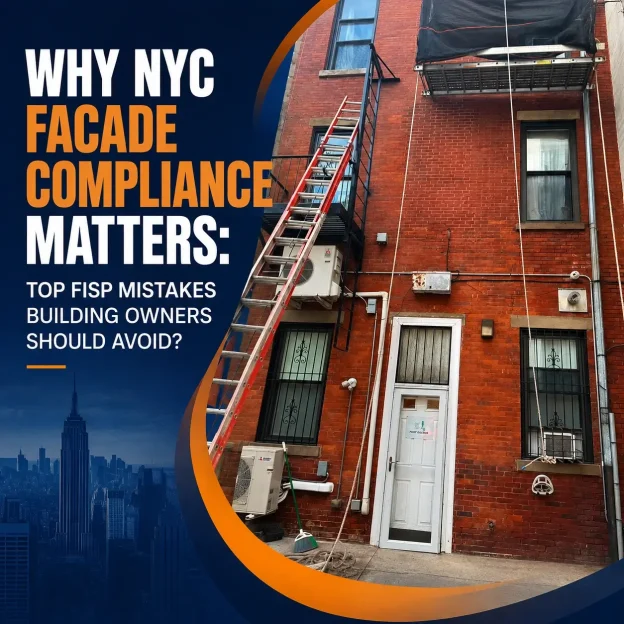
  • Why NYC Facade Compliance Matters: Top FISP Mistakes Building Owners Should Avoid?

    Why NYC Facade Compliance Matters: Top FISP Mistakes Building Owners Should Avoid?

    Understanding typical facade errors in NYC is more important than ever because enforcement is increasing. Here, we can provide you with the information you need to avoid problems with your façade compliance plans. For the protection of residents and passersby, high-rise structures must be both aesthetically pleasing and safe.

    Formerly known as Local Law 11/98, the Façade Inspection Safety Program (FISP) regulation requires building facades to be regularly inspected and repaired in order to preserve their structural integrity. However, when managing façade restoration projects, a lot of owners make serious errors that compromise the effectiveness, calibre, and compliance of the work.

    The significance of FISP compliance, a list of typical errors made by owners, and the necessity of careful preparation will all be discussed below.

    Comprehending FISP

    Building owners are required by law to employ competent experts to evaluate the state of their façade every five years as part of the Facade Inspection Safety Program (FISP).

    In order to find and fix possible problems like cracks, deteriorations, or loose parts, these checks are essential. There are serious risks associated with neglecting or postponing these checks, such as missing important fixes and safety issues.

    Because even a small flaw that permits water infiltration can quickly hasten the deterioration of other regions, building owners must be aware of the possible long-term repercussions of such carelessness. For the safety of occupants and pedestrians, it is imperative to take prompt action to rectify deficiencies that have been detected and to ensure compliance in order to prevent severe financial fines and non-compliance infractions.

    Building owners can take a number of proactive measures to reduce these risks:

    • Don’t underestimate; give yourself enough time for filings, repairs, and inspections. Different lead times are advised depending on how the last cycle turned out. Owners should start the inspection and planning process eight to twelve months in advance for structures that were previously declared safe. It is advised to give buildings designated as SWARMP (Safe with a Repair and Maintenance Program) an extra 12 to 16 months before the deadline.
    • Make use of professionals and resources. Make sure you stay informed about deadlines and developments to advance the project, whether you’re tracking facades with SiteCompli’s Compliance Manager and calendar integration or maintaining constant communication with your façade specialist.

    The Facade Inspection Safety Program: What Is It?

    Owners of buildings taller than six stories must have their outside walls and appurtenances inspected every five years under FISP, formerly known as Local Law 11.

    • A building must submit a technical report to the department of buildings when the inspection is finished, designating façade elements as either safe, safe with a repair and maintenance program, or unsafe. Unsafe façade components need to be fixed right away and within 30 days.
    • By preventing bricks, concrete, and other façade components from falling on pedestrians, FISP is intended to guaranty pedestrian safety.
    • In order to find and fix possible problems like cracks, deteriorations, or loose parts, these checks are essential. There are serious risks associated with neglecting or postponing these checks, such as missing important fixes and safety issues.

    Conclusion

    Owners should seek expert advice, understand the significance of FISP compliance, and educate themselves on the inspection and repair procedure. Owners may emphasize safety, increase property values, and contribute to the overall sustainability and attractiveness of their buildings by being proactive with facade upkeep and repairs.

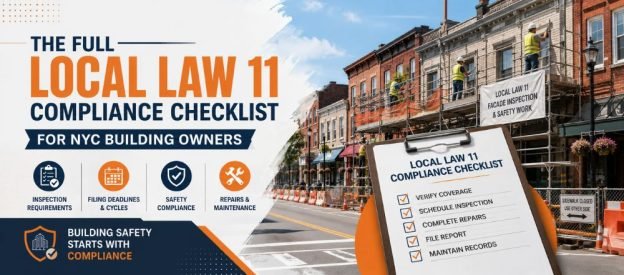
  • The Full Local Law 11 Compliance Checklist for NYC Building Owners

    The Full Local Law 11 Compliance Checklist for NYC Building Owners

    Being a landlord of a block in New York City is a lot more than just collecting rent and keeping the common areas clean. One of the most important is to keep the outside of your property safe for people living in it and pedestrians.

    This is where Local Law 11, otherwise known as the Façade Inspection & Safety Program (FISP) comes into play. The law requires periodic façade inspections of qualifying buildings and the remediation of any safety issues before they become serious hazards.

    Unfortunately, many building owners wait until the filing deadlines are looming to act. This often results in hurried inspections, expensive emergency repairs, avoidable violations and undue stress.

    The good news? Staying compliant shouldn’t be difficult.

    This Local Law 11 compliance checklist guides you through every single critical step, so you can get prepared well in advance of the deadlines and protect your building, your tenants and your budget.

    What Is Local Law 11?

    Local Law 11 is a New York City law that mandates exterior wall inspections of buildings greater than six stories every five years.

    The law, administered by the Façade Inspection & Safety Program (FISP), is designed to identify deteriorated masonry, loose bricks, cracked parapets, damaged balconies and other façade defects that may pose a risk to public safety.

    Each inspection is performed by a Qualified Exterior Wall Inspector (QEWI) who evaluates the exterior condition of the building and submits a technical report to the NYC Department of Buildings. Based on the results a building can be classified as:

    • Secure
    • Safety with a Maintenance and Repair Program
    • Not safe

    The Complete Local Law 11 Compliance Checklist

    Local Law 11 Checklist A Local Law 11 checklist is a step-by-step guide that walks NYC building owners through the requirements of the Façade Inspection & Safety Program (FISP). This involves checking inspection due dates, hiring a Qualified Exterior Wall Inspector (QEWI), completing necessary façade repairs, filing reports with the NYC Department of Buildings, and keeping compliance records to prevent penalties.

    Verify That Your Building Is Covered By Local Law 11

    Before you book anything, check if your building is covered by FISP.

    Generally, buildings higher than six stories are required to be inspected every five years. It typically comprises mixed-use properties, condominiums, cooperatives, office buildings, and apartment complexes.

    Locate Your Tax Filing Due Date

    One of the biggest mistakes building owners make is assuming inspections can happen anytime.

    The NYC Department of Buildings assigns each building a filing cycle. If you fail to file in the filing period assigned to you, you could face civil penalties, not to mention administrative headaches.

    Keep track of:

    • filing period
    • Deadline for submission
    • Extension qualifications
    • History of inspection

    Hire a Qualified Exterior Wall Inspector (QEWI)

    Not all engineers or architects are qualified for Local Law 11 inspections.

    The inspection must be performed by a Qualified Exterior Wall Inspector (QEWI) who meets the city’s licensing and experience requirements. There are many benefits to hiring an experienced QEWI:

    • Correct evaluations
    • Technical Reports
    • Repair tips (practical)
    • Filing errors decreased
    • Improved long-term maintenance planning
    • Schedule the Exterior Inspection Ahead

    Make Sure Every Exterior Wall Is Checked

    Local Law 11 does not only apply to the front facade.

    An inspection will entail a detailed review of all exterior walls and architectural features that could impact public safety. This typically means evaluating:

    • Stonework
    • Stone cladding
    • Balustrade
    • Decks/Balconies/Patios
    • Lintels for windows
    • Cornices
    • Red clay
    • 2. Sealants
    • Fire Exits
    • Architectural decorative details

    Carefully Review the Inspection Results

    Once the inspection is done, your QEWI will assign the building a condition rating.

    Don’t just put the report in the drawer. Read it over to learn:

    • Immediate safety problems
    • Repairs Recommended
    • Maintenance priorities
    • Estimated repair times
    • Areas needing continuous monitoring

    Complete any Necessary Repairs Immediately

    If your building is marked as SWARMP or Unsafe do not wait to make repairs.

    Dangerous conditions may require immediate protective measures to protect the public, such as sidewalk sheds or protective fencing, until repairs are made.

    Typical repairs involve brick replacement, repointing masonry, sealing cracks, balcony renovation, and more.

    Implement Public Safety Protocols When Necessary

    When dangerous conditions exist, the safety of pedestrians takes precedence.

    Possible temporary measures are, depending on the situation:

    • Sidewalk canopies
    • Safety netting
    • Barriers for protection
    • Portable fencing
    • Restricted access areas

    These measures will be in effect until permanent repairs are made and approved.

    File Your Report Properly

    Sending the inspection isn’t just uploading paperwork.

    Your QEWI submits and files all required technical documentation with the NYC Department of Buildings.

    Ensure that:

    • All forms submitted
    • Includes required certifications
    • Paying Filing Fees
    • Supporting documents enclosed
    • Submissions will be on time

    Administrative errors can still slow approvals even after an inspection is completed.

    Once filed you must keep the records safely. These records facilitate future inspections and reflect responsible management of the building.

    Stay current with regulations and safeguard your investment

    Local Law 11 is not just another regulatory requirement. It’s an opportunity to protect your property, cut down long-term maintenance costs, and safeguard everyone who lives, works or walks around your building.

    This Local Law 11 compliance checklist will make the process much more manageable. By scheduling inspections early, working with a qualified QEWI, attending promptly to repairs and keeping good records you will help to avoid unnecessary penalties and extend the life of your building façade.

  • Top Reasons Why Building Facade Repair Is Essential For NYC Property Owners?

    Top Reasons Why Building Facade Repair Is Essential For NYC Property Owners?

    A reputable façade restoration business, Façade Repair NYC offers complete services for both residential and commercial structures. As skilled inspectors, contractors, and Local Law 11 specialists, we offer customized restoration and compliance solutions that improve durability, safety, and aesthetic appeal. Our professional services help preserve structural integrity while adhering to all Local Law 11 standards, with an emphasis on quality and compliance.

    In New York City, Facade Repair NYC has been a reputable contractor for facade restoration. In order to keep buildings safe, code-compliant, and aesthetically pleasing over time, our team assists building managers and commercial property owners with exterior restoration, maintenance, and repairs. We are the best if you want the facade repaired.

    Facades are a building’s outermost covering that gives it its distinct identity by adding architectural character and aesthetic “feel.” Restoring the facade is crucial since it improves the property’s general state. If you’re looking for affordable façade repair services in NYC, you can speak with our professionals.

    Why Is Building Facade Repair Necessary?

    A building’s facade may deteriorate with time, harming its aesthetic value. If you ignore such a condition for an extended period of time, the repairs could be extremely expensive. A building’s potential to endanger people and things below increases with its age.

    Additionally, it could be catastrophic if weak and damaged pieces fall into the sidewalk. For building facade repairs, you must speak with experts if you want to prevent such tragic incidents. To prevent unintended accidents, the experts will examine the entire property and repair facades.

    How To Spot Facade Problems: Symptoms And Indications?

    Does the facade of your building exhibit indications of deterioration? Keep an eye out for evidence of efflorescence, water stains, loose or missing tiles, corroded metal components, and cracked or disintegrating masonry. These are typical signs that your exterior might require Bronx brick facade restoration. Check the facade of your building on a regular basis for any obvious damage. Early detection of any problems is crucial to avoiding more harm. Postponing facade repairs may eventually result in more significant and expensive damage. In addition to ensuring your building’s stability and safety, quick problem-solving helps you avoid future structural concerns and higher repair costs.

    Why NYC Facade Maintenance Is Important All Year Long?

    The weather in New York City puts a lot of strain on building facades. As the temperature drops in the winter, moisture seeps into tiny gaps and freezes. Over time, this process weakens the joints between bricks and mortar by causing the material to expand. Even little flaws have the potential to develop into major structural issues as the cycle continues.

    Pollution and humidity start to impact the surface during the warmer months. Protective layers are gradually broken down by dirt accumulation, moisture retention, and exposure to the environment, making the facade more susceptible to deterioration. These surface-level problems frequently go undetected until they need significant repairs in the absence of routine inspections.

    A year-round maintenance plan aids in the early detection of issues before they become more serious. It guarantees that your building stays compliant with NYC rules, lowers long-term repair costs, and enhances safety. Additionally, regular maintenance prolongs the life of facade materials and guards against unforeseen structural hazards.

    Note: In need of trustworthy facade repair in Queens? Our experienced and licensed contractors are prepared to work carefully and precisely on your job. Get started with a free quote by contacting us right now to make sure your facility remains secure and well-maintained.

  • Complete Guide To Facade Repair & Restoration In New York

    Complete Guide To Facade Repair & Restoration In New York

    The architecture of a building’s front protects interiors from environmental dangers in addition to improving aesthetics. Facade upkeep is crucial for performance and durability. This blog will teach you how to keep your building sturdy and aesthetically pleasing for decades, as well as the importance of materials, innovations like kinetic facades, and practical facade care techniques.

    The Significance Of Facade Maintenance

    Weather, pollutants, and structural stresses are continual threats to any facade. Facades can degrade without regular maintenance, endangering structural integrity and driving up expenses. Frequent maintenance guarantees safety and excellent performance in addition to extending the lifespan of the facade. For instance, mildew and rust can develop on badly maintained facades in humid areas, diminishing their aesthetic and practical value. Did you know that facade failures cause 30% of building problems reported globally? These dangers can be considerably reduced by making maintenance investments. If you are planning restoration work, it is equally important to choose the right facade repair contractor to ensure long-lasting and professional results.

    Key Arguments In Favor Of Facade Upkeep And Restoration

    Over Time, Facade Damage Accumulates

    The majority of the damage builds up gradually over months or even years rather than from a single, dramatic occurrence, which is one of the reasons facade restoration is all too easy to overlook.

    The following are some of the elements that will cause harm to your facade:

    • Features of the structure, such as its age, texture, and building materials
    • Traffic patterns’ volume and kind
    • The local climate, which includes precipitation, strong winds, and hot or cold temperatures
    • Organic and salt deposits in coastal areas like Florida and Hawaii
    • The aforementioned information is altered variously by soiling and contaminants that accumulate over time, such as acid rain, industrial emissions, or environmental oxidation/

    Facade Value Is Increased By Preventive Maintenance

    Choosing the right cleaning supplies and techniques is part of preventive maintenance for your facade. Since every facility is different, maintenance should be tailored according to a variety of parameters, including the size and materials of the structure, the location, and the kinds of damage that need to be fixed.

    Ignoring Upkeep Now Will Result In More Expensive Repairs Down The Road

    Significant deterioration lowers your property’s value and may pose a risk to public safety. Additionally, the longer you wait, the more difficult and costly it is to correct.

    • Dust, grime, and other debris soiling your building does more than just make it look bad. Additionally, it makes structural flaws like degradation, corrosion, fractures, and cracks more likely to go unnoticed.
    • Dangerous water intrusion can erode the building, raising the possibility of accidents like falling objects or even facade collapse. Additionally, you might be held accountable for harm brought on by mishaps where overlooked damage played a role.

    Facade Inspections Help You Determine Your Priorities

    Making facade restoration a regular aspect of conducting business rather than something you put off until later starts with routine inspections by a reliable service provider.

    • Keep an eye out for surface damage including water leaks, building settlement or shifting, warping, cracking, and loose screws.
    • Examine all building openings, including doors, windows, and vents, that might be a source of water leaks.
    • Determine whether structural problems, such as cracks, vanishing sealants, and pollutants, could result in leaks or moisture accumulation.
    • Check for debris clogging gutters, downspouts, and drains, as well as damage to roof components like copings and flashings.

    Note: Restoring a facade is a difficult procedure that calls for specialized knowledge. Our experts evaluate the building’s state, pinpoint underlying problems, and create a restoration strategy.

  • Top Signs Your Building Needs Professional Facade Repair In NYC

    Top Signs Your Building Needs Professional Facade Repair In NYC

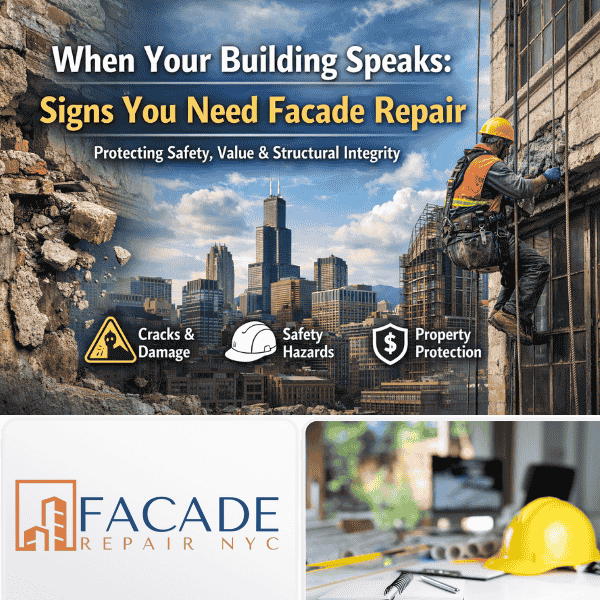
    When Your Building Speaks: Signs You Need Facade Repair

    Beyond just creating a good first appearance, your building’s facade also helps with energy efficiency, occupant safety, and weather protection. However, even the most resilient materials may eventually show signs of deterioration due to Chicago’s freeze-thaw cycles, rain, and pollution, just like any other external surface.

    Being aware of when facade repair NYC is necessary for your building can assist keep minor problems from developing into more serious structural difficulties. Throughout the city, Facade repair NYC has assisted in the restoration of innumerable historic, multi-unit residential, and commercial structures. In addition to keeping your building looking nice, facade repairs NYC are essential for maintaining structural integrity, guaranteeing safety, and safeguarding property value.

    If ignored, they may worsen and result in dangerous circumstances or expensive damages. Quick action guarantees adherence to safety regulations, protects your property, and stops additional deterioration. Don’t let little problems turn into major catastrophes; this post will help you recognize typical indicators of deterioration and navigate the difficulties and best practices of urgent repairs.

    Early diagnosis and mediation of facade safety repairs will help you avoid potential liabilities and save hundreds of thousands of dollars in future repair expenses. This post will explain why regular upkeep and prompt facade safety repair and remediation are essential components in maintaining the structural integrity of your building.

    Is The Facade Of Your Building Dangerous?

    Your building does not have a check-engine light as your car does. Therefore, we advise regular inspections and assessments to promptly detect facade safety hazards. Many cities mandate facade safety inspections. The criteria are influenced by the building’s height, age, and kind of construction. More significantly, if a façade component fails, the building owner is still liable even after passing an inspection. We advise checking your facade at least two to three times a year because of this. Emergency facade safety repairs are outside building safety issues that require immediate attention.

    Identifying Facade Deterioration Symptoms

    What to look for depends on a number of elements, such as environmental conditions, building design, facade access, and facade material. For these reasons, you can identify building facade safety issues and how to fix them more quickly if you have a better understanding of the particular requirements of your structure.

    • Pinholes, blisters, flaking, discoloration, cracking, and spalling.
    • Corrosion, loose mortar, biological growth, staining, and cracking and spalling.
    • Decay, loose railings, corrosion, rusting, standing water, and cracks.
    • Surface damage, blisters, bulging, discoloration, or loose stucco.
    • Missing or loose mullions or gaskets.

    These are the more overt indicators that your building’s facade requires immediate repair. If facade damage is not fixed right away, falling objects could endanger public safety and cause injuries or worse. Neglect might also lead to infractions or fines and necessitate more significant repairs.

    Complete Safety Repairs For Facades With Facade repair NYC

    It pays to move quickly when it comes to Facade Repair Queens. If minor facade flaws are not addressed, they increase in risk, expense, and scale. Facade repair NYC is a partner you can rely on to evaluate, fix, and restore your building’s façade when there are indications of problems developing beneath the surface. Selecting Facade repair NYC entails working with a pioneer in building envelope safety. We provide comfort in knowing that your property is in capable hands and safeguarded from present and upcoming difficulties.

    Note: Get in touch with us right now to discuss how we can work together to meet all of your needs for facade safety repairs.

  • How to Choose the Right Facade Repair Contractor

    How to Choose the Right Facade Repair Contractor

    So, you’re thinking about fixing up your building’s facade? Awesome! Honestly, it can feel a bit overwhelming at first. There are so many contractors out there, and each one promises to be “the best.” Here’s the thing: you don’t need fancy jargon or complicated comparisons. You just need someone who gets the job done right, keeps you in the loop, and makes sure your building looks amazing for years. Think of it like picking a teammate for a project; you want someone reliable, skilled, and easy to work with. Let’s walk through how to actually make that choice without the headache.

    Things to Consider Before Hiring a Facade Repair Contractor

    To pick the right facade repair contractor, take a close look at their experience and past projects, confirm they have the proper licenses and insurance, and speak with previous clients. You want someone who has handled similar work successfully, communicates clearly, and presents a detailed, professional plan that outlines the timeline, budget, and safety precautions.

    Understanding Your Needs

    First off, take a good look at your building and figure out the type of repairs needed. Is it cracks, water damage, or aging materials? Maybe it’s a combination. Jot it down, even roughly. This will help you explain the situation clearly to potential contractors. Trust me, when you know what you’re looking for, it saves a ton of back-and-forth later.

    Researching Potential Contractors

    Next, start your homework. Look online, ask neighbors, or check local forums. You’d be surprised how much word-of-mouth helps. Make a list of contractors who seem reliable. Don’t just stop at the first few names, dig a little, read reviews, and get a feel for who’s got a solid reputation.

    Evaluating Contractor Experience and Expertise

    You want someone who has done similar projects before. So, ask questions like, “Have you worked on buildings like mine?” or “What materials are you most comfortable with?” Experience matters a lot in facade repair because every building has its quirks. And honestly, it’s nice knowing you’re in capable hands.

    Assessing Project Management Capabilities

    Even the best contractor can struggle if they don’t manage the project well. Ask about timelines, communication style, and how they handle unexpected issues. Can you imagine them showing up late or leaving a mess? Yeah, you want to avoid that. Good project management keeps everything on track and stress-free.

    Examining Portfolio and References

    Check out their previous work. Most contractors will have a portfolio, and asking for references is totally normal. Chat with past clients if you can; it’s like getting the inside scoop. You’ll quickly see who consistently delivers quality work and who talks a big game but can’t back it up.

    Budgeting and Financial Considerations

    Money matters, right? Discuss your budget openly. A transparent contractor will break down costs clearly and help you avoid hidden fees. And hey, sometimes spending a little more upfront saves a ton later because the work actually lasts.

    Contract and Legal Aspects

    Always have a written contract. Sounds obvious, but you’d be surprised how often this gets overlooked. The contract should cover timelines, costs, materials, and warranties. It’s basically your safety net and keeps everything professional.

    Project Execution and Monitoring

    Once the work starts, stay involved without hovering. Check in, ask questions, and make sure the contractor is sticking to the plan. You’ll be amazed at how smoothly things go when there’s clear communication from the start.

    Post-Construction Considerations

    After the job is done, inspect the work, ask about maintenance tips, and make sure all warranties or guarantees are clear. It’s the final step to ensure your building stays in great shape for years.

    Conclusion

    So, that’s the gist of it. Choosing the right facade repair contractor isn’t rocket science; it’s about knowing what you need, doing a little research, asking the right questions, and staying involved. If you follow these steps, you’ll likely end up with a contractor who’s reliable, skilled, and just plain easy to work with. And honestly, seeing your building looking refreshed and solid? Totally worth it, don’t you think?