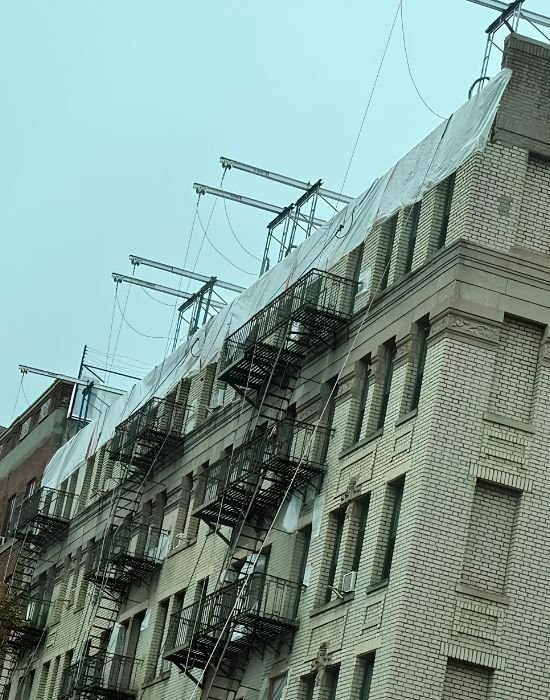
Our commercial work typically covers:
- Masonry repair and repointing
- Curtain wall and EIFS sealant replacement
- Precast and terra cotta panel and anchor repair
- Parapet and coping repair
- Structural steel and lintel repair or replacement
- Waterproofing
- FISP-driven repair and violation remediation
We match new material and sealant systems to whatever’s already on the building wherever we can. It’s not only about how the finished repair looks. Materials and sealants expand and contract at different rates as temperatures shift through the year, and a repair that doesn’t match the surrounding system tends to fail sooner than everything else on the wall.
How We Handle A Commercial Facade Repair Job In NYC
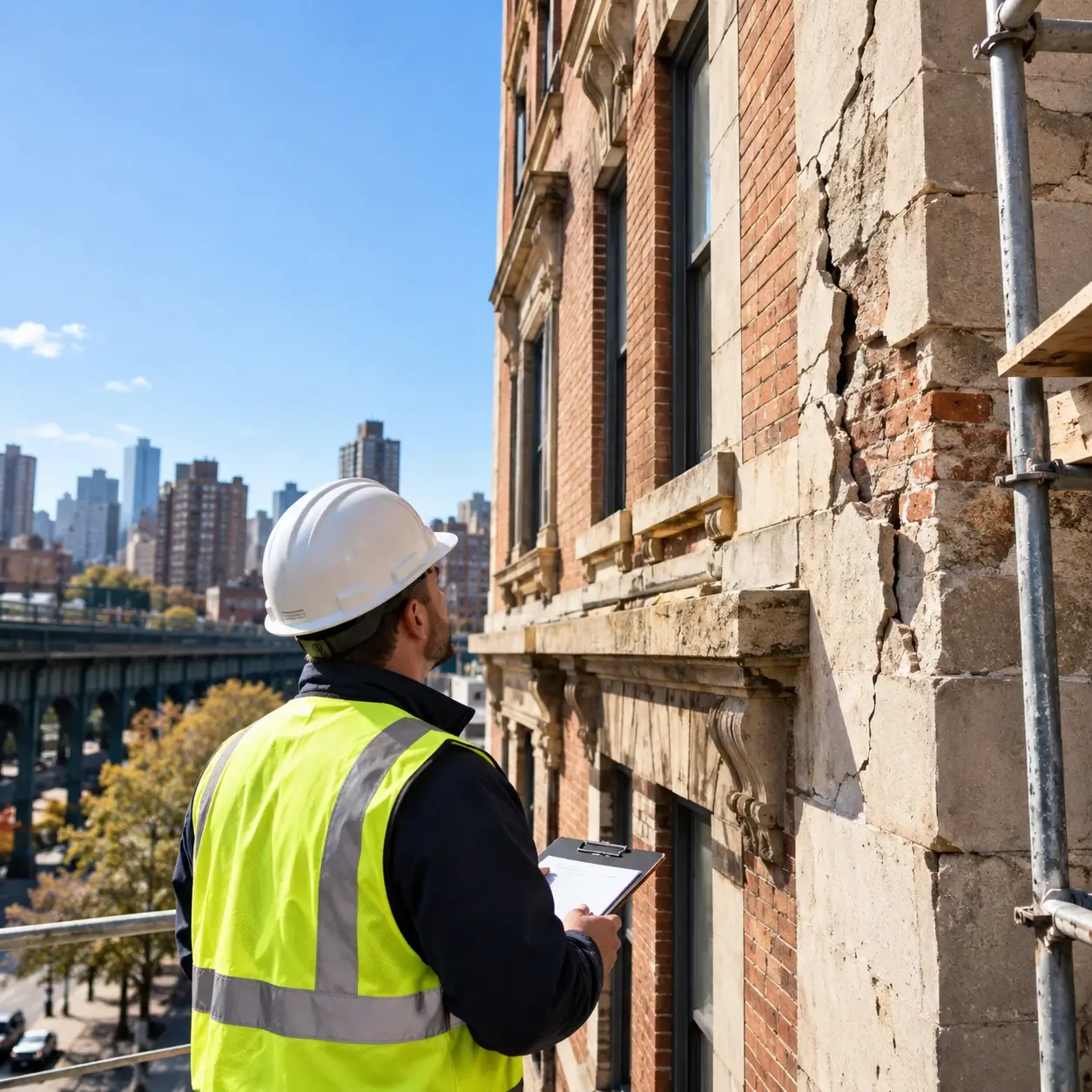
Photos aren’t enough for a commercial quote. Someone has to get on site, walk every elevation that’s causing problems, test anchor condition on panels instead of guessing from the ground, and trace where water’s actually getting in. That’s what tells us whether we’re looking at surface damage or something already working its way into the structure. Once we’ve got a real picture of the job, we put the scope and the cost in writing before a crew ever shows up.
Most commercial buildings are masonry, curtain wall, or some combination, and the two fail in completely different ways. Masonry loses its mortar joints first, almost always up high where water sits the longest after rain. Curtain wall and EIFS come down to sealant failure nearly every time. We don’t treat these the same, and we won’t reseal over a problem that actually needs attention at the panel or the framing underneath it.
Water does more damage to commercial facades than anything else we deal with. It gets in through failed sealant, cracked masonry, a parapet that’s deteriorated, any gap in the envelope. We seal those points and waterproof what needs it, because fixing what’s visible without addressing where the water’s coming from just means doing the same repair again in a year or two.
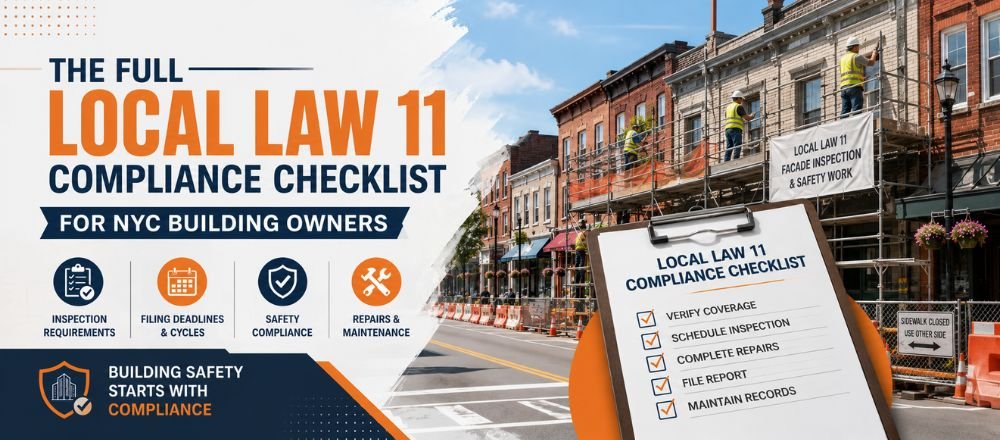
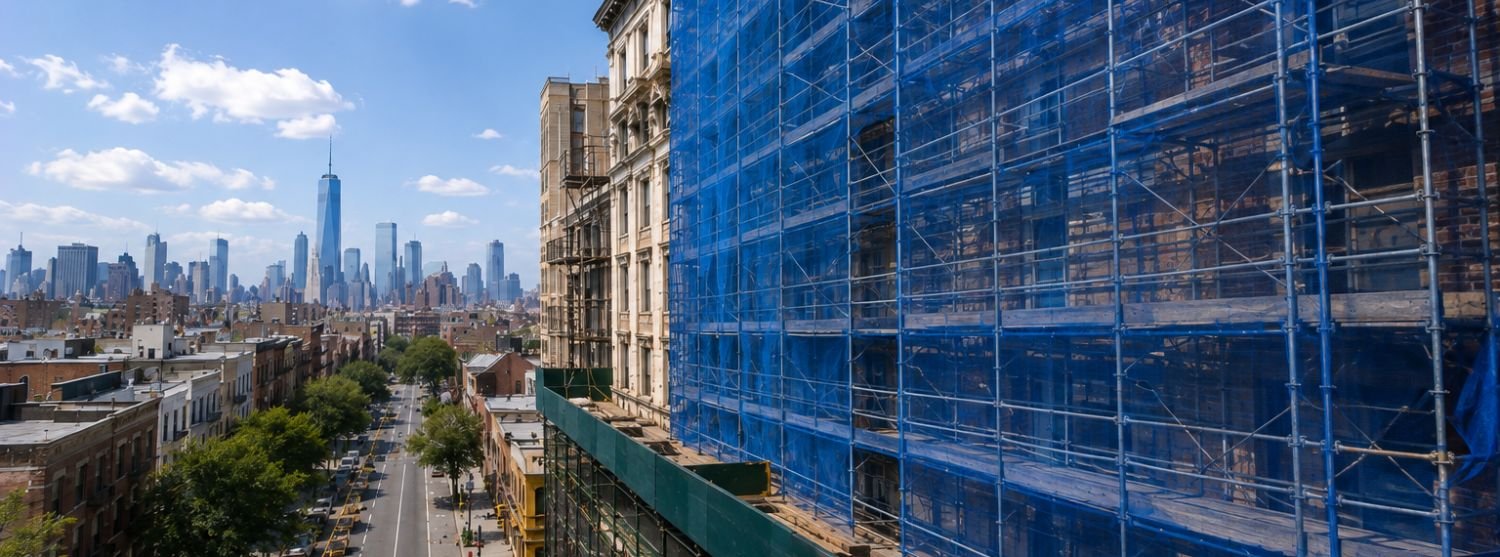
Buildings over six stories are on a FISP cycle whether anyone’s tracking it internally or not. We run the QEWI inspection and document every elevation before filing with DOB. If the building comes back Safe, that’s it, nothing further is required until the next cycle. SWARMP is different; it means the required repairs plus whatever interim safety measure the report calls for, usually a shed or netting, and that stays in place until the follow-up inspection clears it. Unsafe doesn’t wait for any of that. Those conditions get addressed immediately.
Working on a building with tenants and foot traffic underneath isn’t the same job as an empty building. We build around the hours the building actually needs, coordinate shed placement with whoever runs the property, and keep the loud work, grinding, demolition, out of the windows that would interrupt a business on the ground floor.
Not everything found during an inspection needs fixing that day, but all of it gets written down. An anchor that’s holding for now but won’t be in a few years, a stretch of masonry a couple of winters from becoming a real problem, that gets flagged so owners and property managers can plan the repair on their own timeline rather than getting hit with an emergency one and whatever fines come with it.
A small repair now costs far less than the same repair after a FISP violation and a wider scope of damage. Contact our team to talk through your building and set up an assessment before a manageable problem turns into an expensive one.