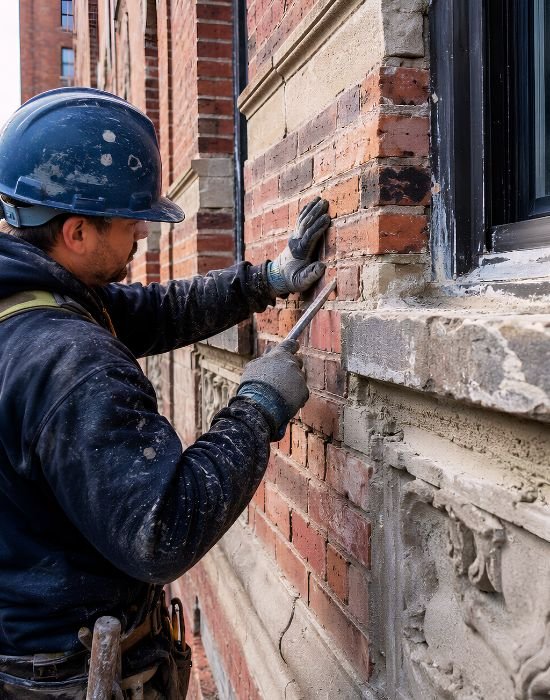
Here’s what our residential work typically covers:
- Brick and mortar repair
- Repointing and masonry restoration
- Cracked and spalled brick replacement
- Steel lintel repair and replacement
- Parapet repair
- Stoop and stair restoration
- Window surround and masonry repair
- Waterproofing
- Stucco repair
- Localized facade restoration
Wherever we can, we match new material to what’s already on the building. That’s not just about how it looks when we’re done. Mortar and masonry have to move with the wall as it expands and contracts through the seasons, and if the new material doesn’t match, the repaired section ages differently than everything around it.
How We Handle A Residential Facade Repair Job In NYC
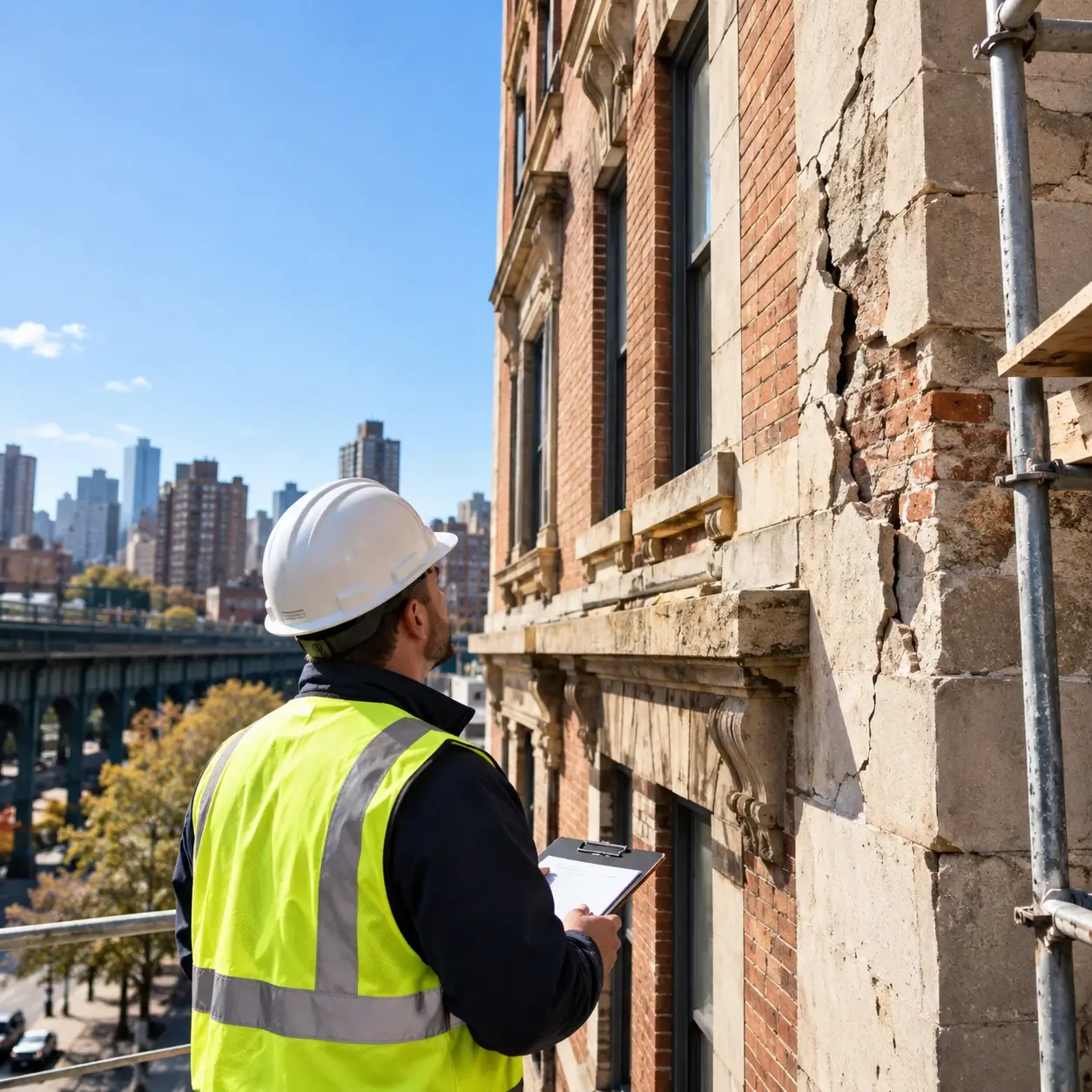
We don’t quote a job off photos. Someone gets on site, looks at the mortar joints, the brick, the lintels, the parapets, the window areas, everything that’s exposed to weather, and checks for signs that water’s getting in or that something has shifted. That tells us whether we’re looking at a surface problem or something deeper that’s already affected the wall behind it.
Once we know what we’re dealing with, we put it in writing: what needs to be done, and what it costs. No verbal ballpark, no surprises once the crew shows up.
Masonry Repair And Repointing
Masonry work is where most residential facade repair jobs end up. Depending on what we find, that might mean pulling out mortar that’s deteriorated and repointing the joints, swapping out damaged brick, or rebuilding a section of the wall outright.
We’re careful about material selection here. A repair can look fine the day it’s finished and still cause problems a year later if what we used doesn’t work with the original construction.
Waterproofing And Moisture Control
Water causes more facade damage than anything else on our list. It gets in through failed joints, cracked masonry, parapets, window openings, wherever there’s a gap.
We seal those entry points and waterproof the areas that need it. Fixing the visible masonry without dealing with where the water’s coming from just means you’re back out here in a year or two for the same problem.
NYC Building Code And Dob Requirements
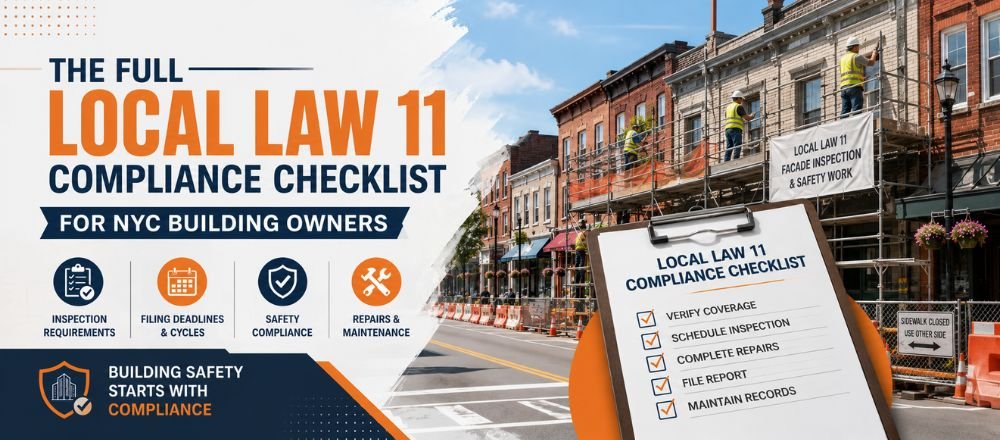
Residential facade repair work in the city has to meet Building Code and DOB requirements, and for properties under Local Law 11, the repair also has to address whatever the facade inspection turned up.
We build the repair scope around the actual inspection findings so the work deals with the documented conditions, not just whatever’s easiest to see.
Working Around Residents And Occupants
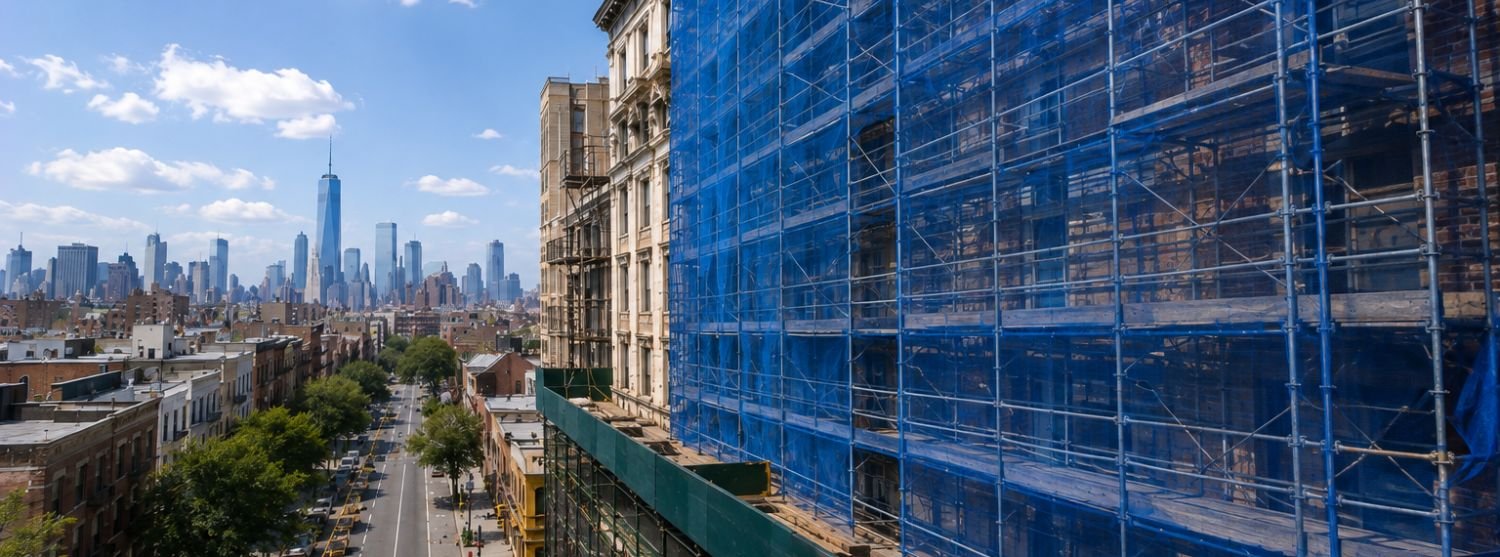
People live in these buildings while we’re working on them. Scaffolding, sidewalk sheds, access points, all of it gets set up with the residents and the neighboring properties in mind.
We try to keep the footprint tight and the disruption low while still having what we need to do the work safely.
Planning Ahead Instead Of Waiting For An Emergency
Not everything we find needs to get fixed today, but everything gets looked at and written down. If we spot aging masonry, a drainage issue, or a piece of the roofline that’s holding for now but won’t be in a few years, we tell you.
That gives homeowners, boards, and property managers the chance to plan for it on their own schedule instead of getting hit with an emergency repair later.
A Small Facade Repair Now Beats A Big One Later.
A cracked brick or a worn mortar joint is a lot cheaper to fix before another winter gets to it. Wait too long and you’re looking at more extensive masonry work, water damage inside the building, a safety issue, or a DOB violation, sometimes all at once.
Schedule a residential facade inspection before a small defect turns into a bigger repair.Contact our team to talk through your property and set up an assessment.