
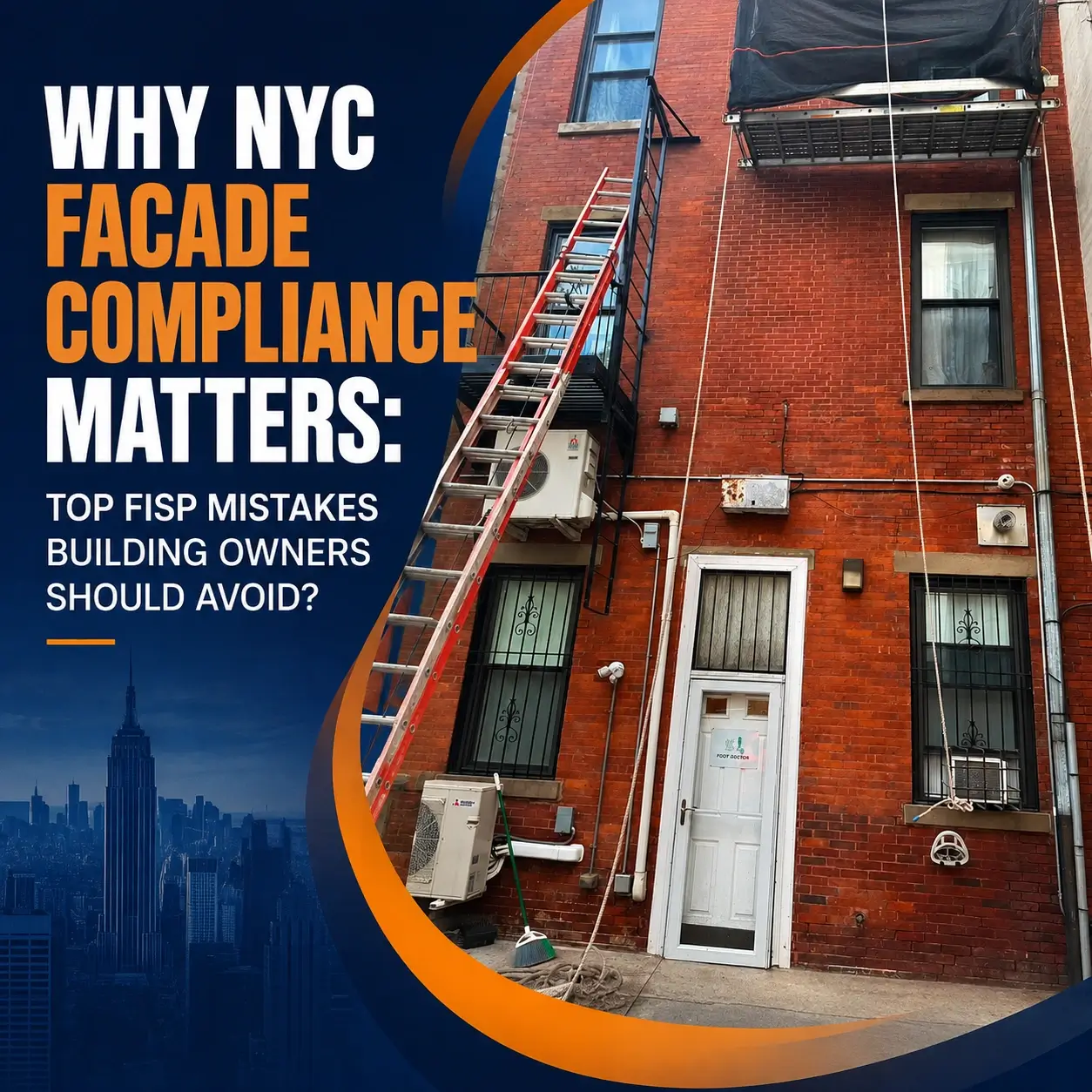
Understanding typical facade errors in NYC is more important than ever because enforcement is increasing. Here, we can provide you with the information you need to avoid problems with your façade compliance plans. For the protection of residents and passersby, high-rise structures must be both aesthetically pleasing and safe.
Formerly known as Local Law 11/98, the Façade Inspection Safety Program (FISP) regulation requires building facades to be regularly inspected and repaired in order to preserve their structural integrity. However, when managing façade restoration projects, a lot of owners make serious errors that compromise the effectiveness, calibre, and compliance of the work.
The significance of FISP compliance, a list of typical errors made by owners, and the necessity of careful preparation will all be discussed below.
Building owners are required by law to employ competent experts to evaluate the state of their façade every five years as part of the Facade Inspection Safety Program (FISP).
In order to find and fix possible problems like cracks, deteriorations, or loose parts, these checks are essential. There are serious risks associated with neglecting or postponing these checks, such as missing important fixes and safety issues.
Because even a small flaw that permits water infiltration can quickly hasten the deterioration of other regions, building owners must be aware of the possible long-term repercussions of such carelessness. For the safety of occupants and pedestrians, it is imperative to take prompt action to rectify deficiencies that have been detected and to ensure compliance in order to prevent severe financial fines and non-compliance infractions.
Building owners can take a number of proactive measures to reduce these risks:
Owners of buildings taller than six stories must have their outside walls and appurtenances inspected every five years under FISP, formerly known as Local Law 11.
Owners should seek expert advice, understand the significance of FISP compliance, and educate themselves on the inspection and repair procedure. Owners may emphasize safety, increase property values, and contribute to the overall sustainability and attractiveness of their buildings by being proactive with facade upkeep and repairs.