
Being a landlord of a block in New York City is a lot more than just collecting rent and keeping the common areas clean. One of the most important is to keep the outside of your property safe for people living in it and pedestrians.
This is where Local Law 11, otherwise known as the Façade Inspection & Safety Program (FISP) comes into play. The law requires periodic façade inspections of qualifying buildings and the remediation of any safety issues before they become serious hazards.
Unfortunately, many building owners wait until the filing deadlines are looming to act. This often results in hurried inspections, expensive emergency repairs, avoidable violations and undue stress.
The good news? Staying compliant shouldn’t be difficult.
This Local Law 11 compliance checklist guides you through every single critical step, so you can get prepared well in advance of the deadlines and protect your building, your tenants and your budget.
Local Law 11 is a New York City law that mandates exterior wall inspections of buildings greater than six stories every five years.
The law, administered by the Façade Inspection & Safety Program (FISP), is designed to identify deteriorated masonry, loose bricks, cracked parapets, damaged balconies and other façade defects that may pose a risk to public safety.
Each inspection is performed by a Qualified Exterior Wall Inspector (QEWI) who evaluates the exterior condition of the building and submits a technical report to the NYC Department of Buildings. Based on the results a building can be classified as:
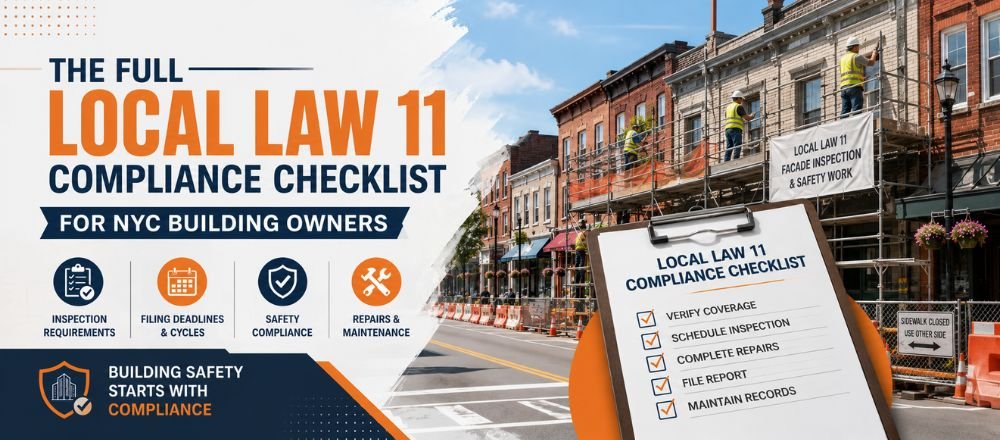
Local Law 11 Checklist A Local Law 11 checklist is a step-by-step guide that walks NYC building owners through the requirements of the Façade Inspection & Safety Program (FISP). This involves checking inspection due dates, hiring a Qualified Exterior Wall Inspector (QEWI), completing necessary façade repairs, filing reports with the NYC Department of Buildings, and keeping compliance records to prevent penalties.
Before you book anything, check if your building is covered by FISP.
Generally, buildings higher than six stories are required to be inspected every five years. It typically comprises mixed-use properties, condominiums, cooperatives, office buildings, and apartment complexes.
One of the biggest mistakes building owners make is assuming inspections can happen anytime.
The NYC Department of Buildings assigns each building a filing cycle. If you fail to file in the filing period assigned to you, you could face civil penalties, not to mention administrative headaches.
Keep track of:
Not all engineers or architects are qualified for Local Law 11 inspections.
The inspection must be performed by a Qualified Exterior Wall Inspector (QEWI) who meets the city’s licensing and experience requirements. There are many benefits to hiring an experienced QEWI:
Local Law 11 does not only apply to the front facade.
An inspection will entail a detailed review of all exterior walls and architectural features that could impact public safety. This typically means evaluating:
Once the inspection is done, your QEWI will assign the building a condition rating.
Don’t just put the report in the drawer. Read it over to learn:
If your building is marked as SWARMP or Unsafe do not wait to make repairs.
Dangerous conditions may require immediate protective measures to protect the public, such as sidewalk sheds or protective fencing, until repairs are made.
Typical repairs involve brick replacement, repointing masonry, sealing cracks, balcony renovation, and more.
When dangerous conditions exist, the safety of pedestrians takes precedence.
Possible temporary measures are, depending on the situation:
These measures will be in effect until permanent repairs are made and approved.
Sending the inspection isn’t just uploading paperwork.
Your QEWI submits and files all required technical documentation with the NYC Department of Buildings.
Ensure that:
Administrative errors can still slow approvals even after an inspection is completed.
Once filed you must keep the records safely. These records facilitate future inspections and reflect responsible management of the building.
Local Law 11 is not just another regulatory requirement. It’s an opportunity to protect your property, cut down long-term maintenance costs, and safeguard everyone who lives, works or walks around your building.
This Local Law 11 compliance checklist will make the process much more manageable. By scheduling inspections early, working with a qualified QEWI, attending promptly to repairs and keeping good records you will help to avoid unnecessary penalties and extend the life of your building façade.