7 Warning Signs Your Bronx Building Needs Facade Restoration

7 Warning Signs Your Bronx Building Needs Facade Restoration

  • Posted On: September 11, 2026

Your building’s facade helps protect the structure from rain, moisture, temperature changes, and environmental exposure. When building materials deteriorate, the problem can affect safety and appearance and can also affect the spaces inside the building.

Recognising the warning signs early can help you determine when professional Facade Restoration Bronx services are required. If the owners decide to wait, a small crack can lead to an extensive problem because of extensive water intrusion or even deteriorating masonry. A professional inspection helps the owners understand the cause of the damage and the correct way to restore it.

What Does Facade Restoration Include?

Façade restoration involves repairing damaged exterior components while preserving suitable parts of the original structure. Depending on the building’s condition, it may include repointing, brick replacement, stone repair, crack sealing, lintel restoration, waterproofing and parapet work. Minor defects may need targeted repairs, while widespread damage may require a complete restoration plan.

Signs Your Building May Need Facade Restoration

The following warning signs can indicate that your building requires a professional inspection and possible restoration.

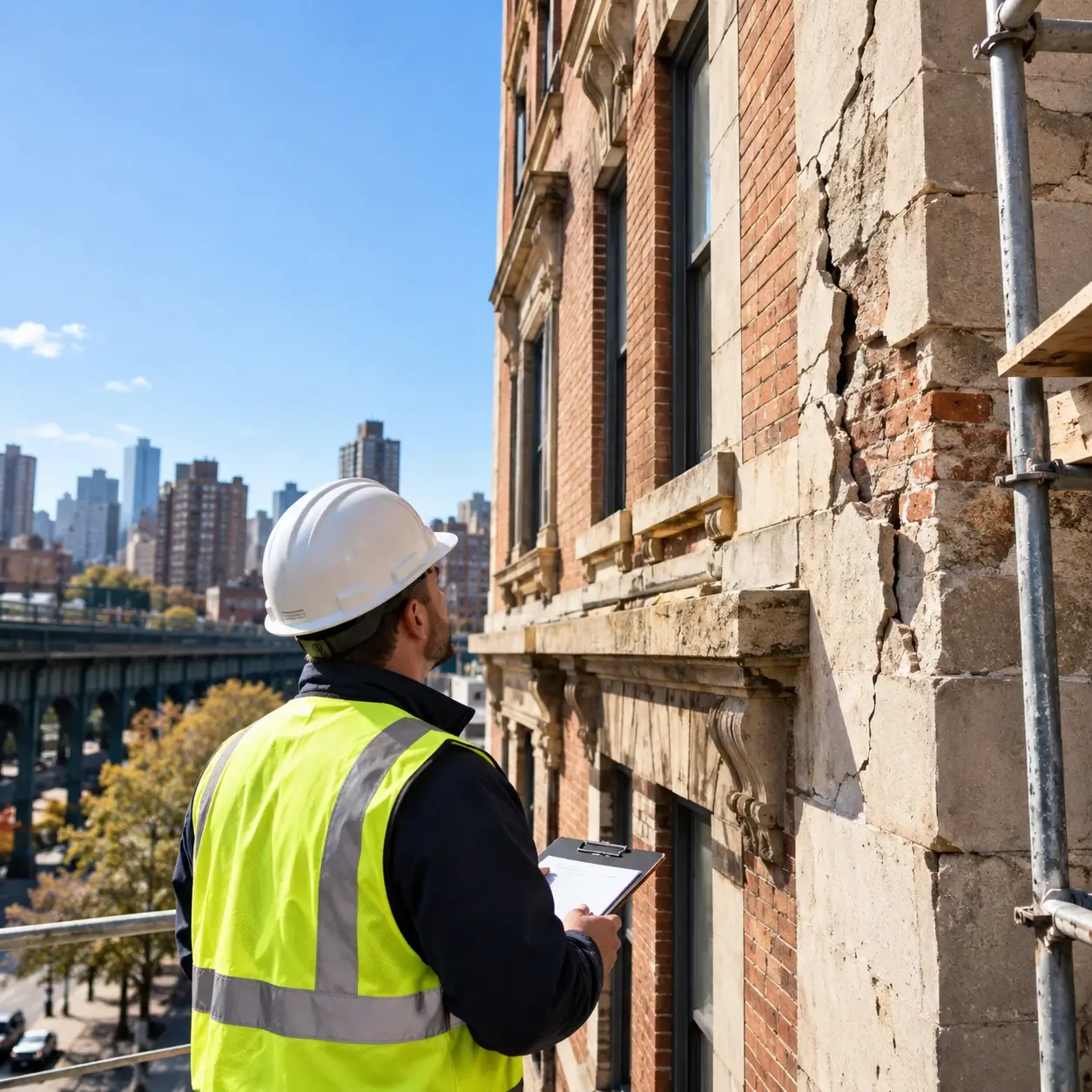
  • 1. Cracked or Deteriorated Masonry: Cracks in bricks, stone, concrete or mortar joints can allow moisture to penetrate the façade. Even small openings may expand through seasonal movement and continued weather exposure.
  • 2. Loose or Falling Materials: Loose bricks, stone fragments or concrete above sidewalks and entrances can create serious safety concerns. Restrict access around the affected area and arrange an inspection instead of attempting to remove unstable materials yourself.
  • 3. Spalling Brick or Concrete: Spalling occurs when the surface of masonry begins to flake, chip or break away. It may indicate that moisture has entered the material and weakened it over time.
  • 4. Water Stains and Interior Leaks: Exterior staining, damp interior walls, peeling paint or moisture around windows may indicate façade failure. Interior repairs alone will not resolve the issue if water continues entering through exterior cracks or damaged joints.
  • 5. Rust Around Lintels: Rust stains above windows or around balconies can indicate corrosion in concealed metal components. Expanding metal may place pressure on nearby masonry, leading to cracking, displacement and surface deterioration.
  • 6. Bulging or Uneven Sections: Bulging walls, displaced bricks or uneven sections may indicate movement or separation within the façade. These conditions require prompt assessment because surface patching may hide rather than correct the underlying problem.
  • 7. Repeated Failure of Previous Repairs: When cracks, leaks or loose materials return after previous work, the original cause may not have been corrected. Professional Facade Restoration Bronx services should address both the visible damage and the conditions contributing to it.

When Local Law 11 Requirements Apply

Under New York City’s Façade Inspection and Safety Program, buildings higher than six stories require exterior-wall inspections every five years. Facades are classified as Safe, Safe With a Repair and Maintenance Program, or Unsafe.

When an inspection identifies required work, an experienced Local Law 11 contractor in NYC can complete repairs according to the inspection report and applicable requirements.

Professional Facade Restoration in the Bronx

Facade Repair NYC provides inspections, masonry repair, waterproofing and exterior restoration for residential and commercial properties. Its façade repair services in the Bronx are planned according to each building’s materials, damage and structural condition.

Conclusion

Timely Facade Restoration Bronx services can help prevent cracks, moisture, corrosion and loose materials from causing broader damage. Contact Facade Repair NYC to schedule an assessment and determine the appropriate restoration solution for your building.