
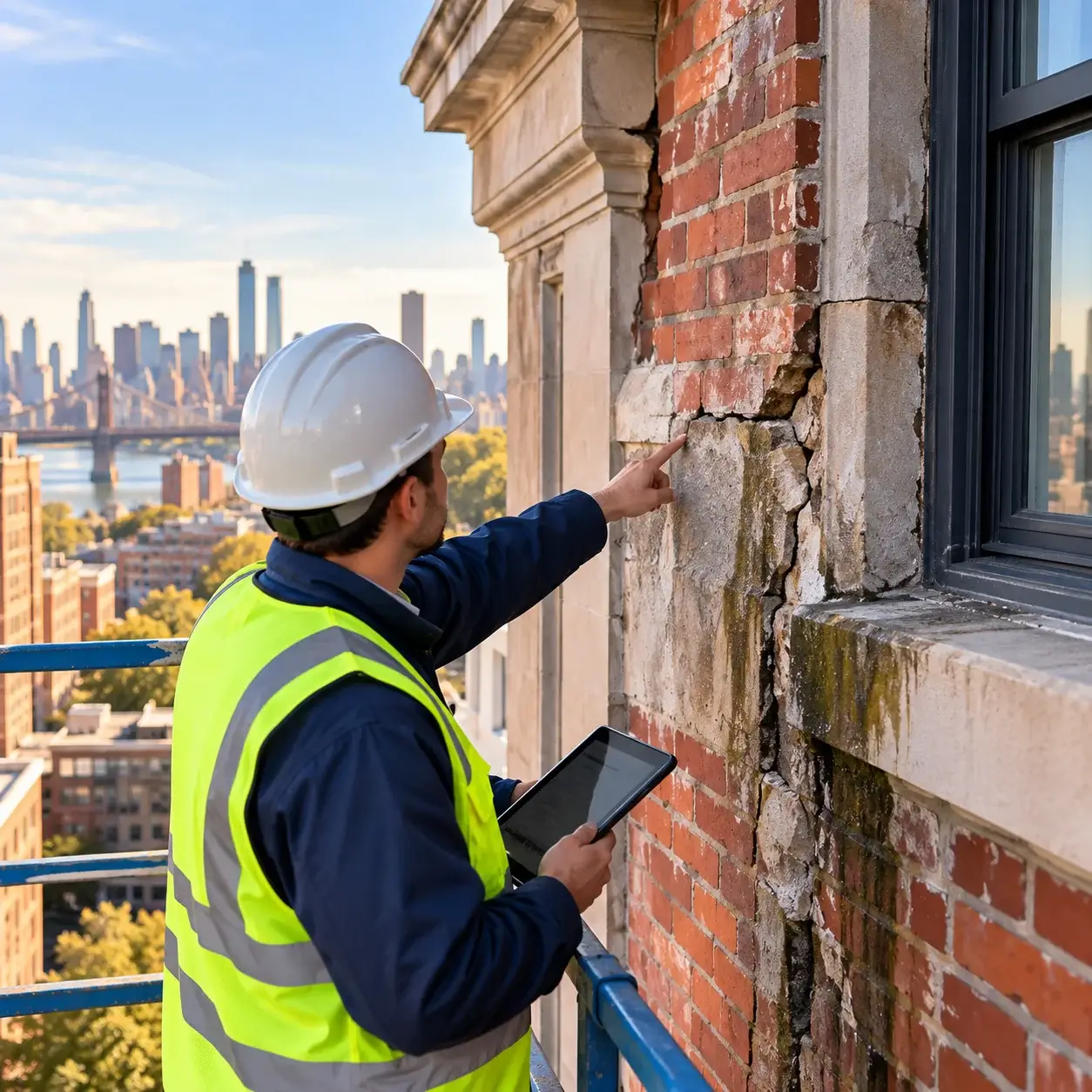
Moisture can gradually weaken a building facade without creating obvious problems at first. Water may enter through cracks, damaged mortar, failed sealants, windows, parapets, and other exposed areas. Over time, continued moisture can affect masonry and create repair concerns.
Facade Inspection Queens can help identify problem areas before they become serious issues. Oftentimes, the issues may not be immediately noticeable. Inspectors may look for signs of failed masonry units, coatings and sealants. Property owners should be aware of issues that Facade Inspectors look for so that they may address issues in a timely manner.
Water can enter through small openings and move behind exterior surfaces. Repeated exposure may contribute to deterioration of brick, concrete, mortar, and sealants.
During an inspection, professionals commonly examine:
These areas can provide clues about possible water entry and deterioration.
Cracked Masonry and Mortar: Cracks in masonry and deteriorated mortar joints can provide pathways for water to enter the facade. During a Facade Inspection Queens, inspectors determine the location and condition of these defects to help determine if further evaluation or repair is warranted.
Spalling and Loose Materials: Moisture can contribute to deterioration that causes brick, concrete, or other facade materials to chip, flake, or break away. Spalling and loose materials should be professionally evaluated because they may indicate deterioration beneath the surface.
Staining and Discoloration: Dark marks and discoloration of materials may indicate that the facade has been exposed to water over an extended period of time. These signs of deterioration may be noted around windows and in masonry joints and other locations that may trap water. While the presence of staining may not always indicate the exact cause, it may help to identify areas warranting further examination.
Damaged Sealants: Sealants around windows and facade joints can deteriorate due to age and weather exposure. Gaps or failed sealants may create pathways for water to enter areas that are difficult to see during a basic visual check.
Leaving moisture problems unaddressed can allow deterioration to spread to nearby materials. Continued water entry may affect masonry, mortar, metal components, and previous repairs.
Property owners should pay attention to recurring leaks, cracks, staining, spalling, and changes around windows or exterior walls. Professional evaluation can help determine the extent of the problem and the appropriate repair approach.
For buildings subject to NYC facade regulations, repair requirements may also need to be considered. A qualified Local law 11 Contractor NYC can handle necessary facade repair work based on findings and project requirements.
Inspection is only one part of facade maintenance. When moisture damage is found, repairs should address both the affected materials and, where possible, the source of water intrusion.
Facade Repair NYC helps property owners address masonry deterioration, moisture damage, and other facade concerns. Similar issues may also be identified during a Facade Inspection Brooklyn, particularly around windows, parapets, and masonry joints.
Moisture damage can begin with a small crack, failed sealant, or deteriorated mortar joint and gradually affect a larger section of a facade. A professional Facade Inspection Queens can identify signs such as staining, cracking, spalling, and loose materials. If you notice these issues, contact Facade Repair NYC for professional inspection and facade repair assistance.
1. What causes moisture damage to a facade?
Cracks, deteriorated mortar, failed sealants, windows, parapets, and other openings can allow water to enter exterior walls.
2. Can moisture damage occur without an interior leak?
Yes. Water can remain within exterior materials without immediately producing visible damage inside the building.
3. What signs can indicate moisture damage?
Common signs include staining, cracks, deteriorated mortar, spalling, loose materials, and damaged sealants.
4. Can a Local Law 11 contractor perform facade repairs?
A qualified contractor can perform required facade repair work while coordinating with the appropriate inspection and design professionals.